 Bio-Integrated
Microdevices Lab
 Koç
KoçUniversity
Bio-Integrated Microdevices Laboratory · Koç University
Engineering bio-integrated devices from the skin surface to deep tissue.
Led by Assoc. Prof. Levent Beker, BMDL at Koç University designs, fabricates, and experimentally evaluates ultrasonic biointerfaces, microneedle and wearable biosensors, and implantable bioresorbable devices.
From the lab · Research · Grants · Awards
Latest research and lab news
Conferences
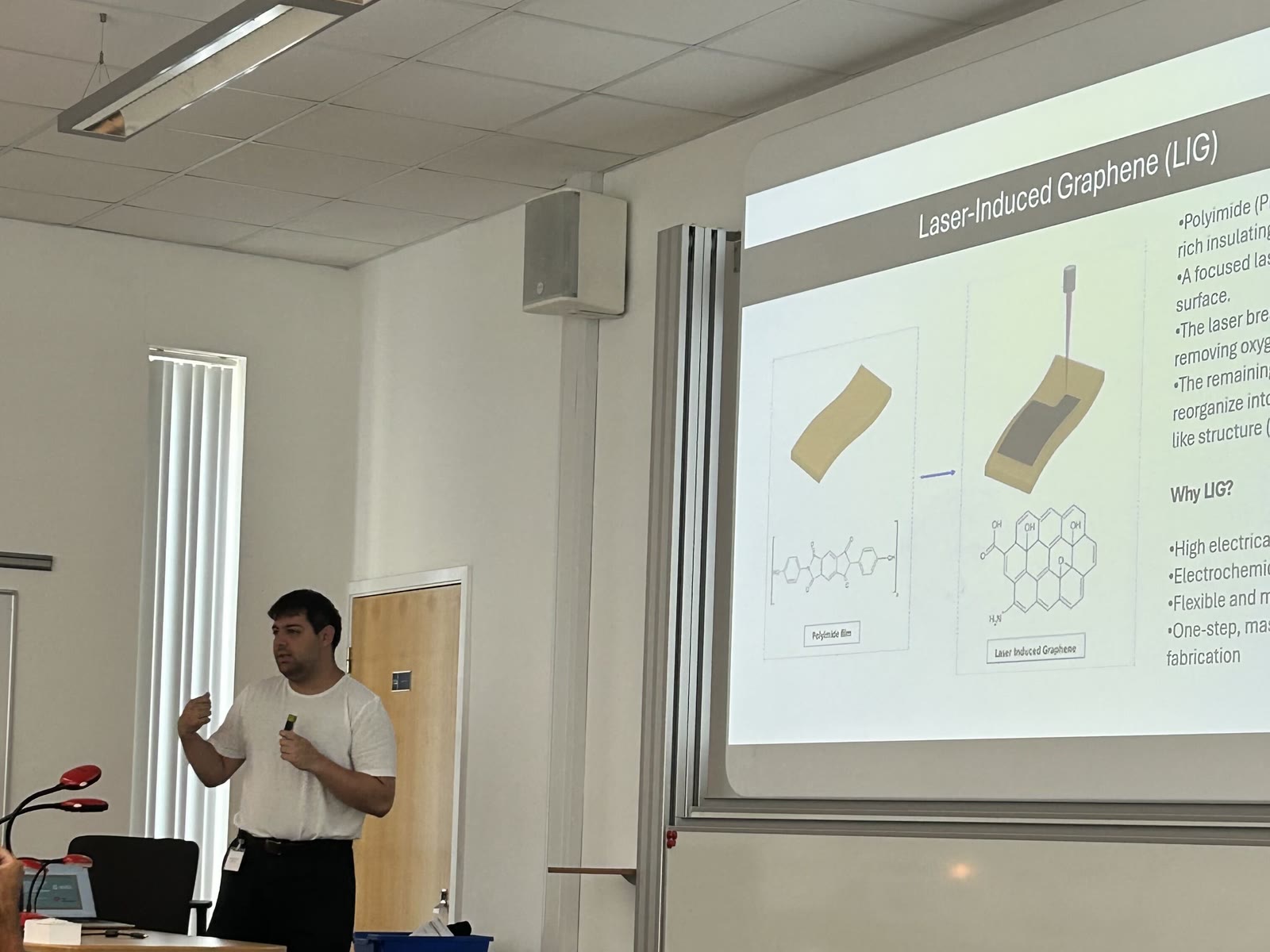
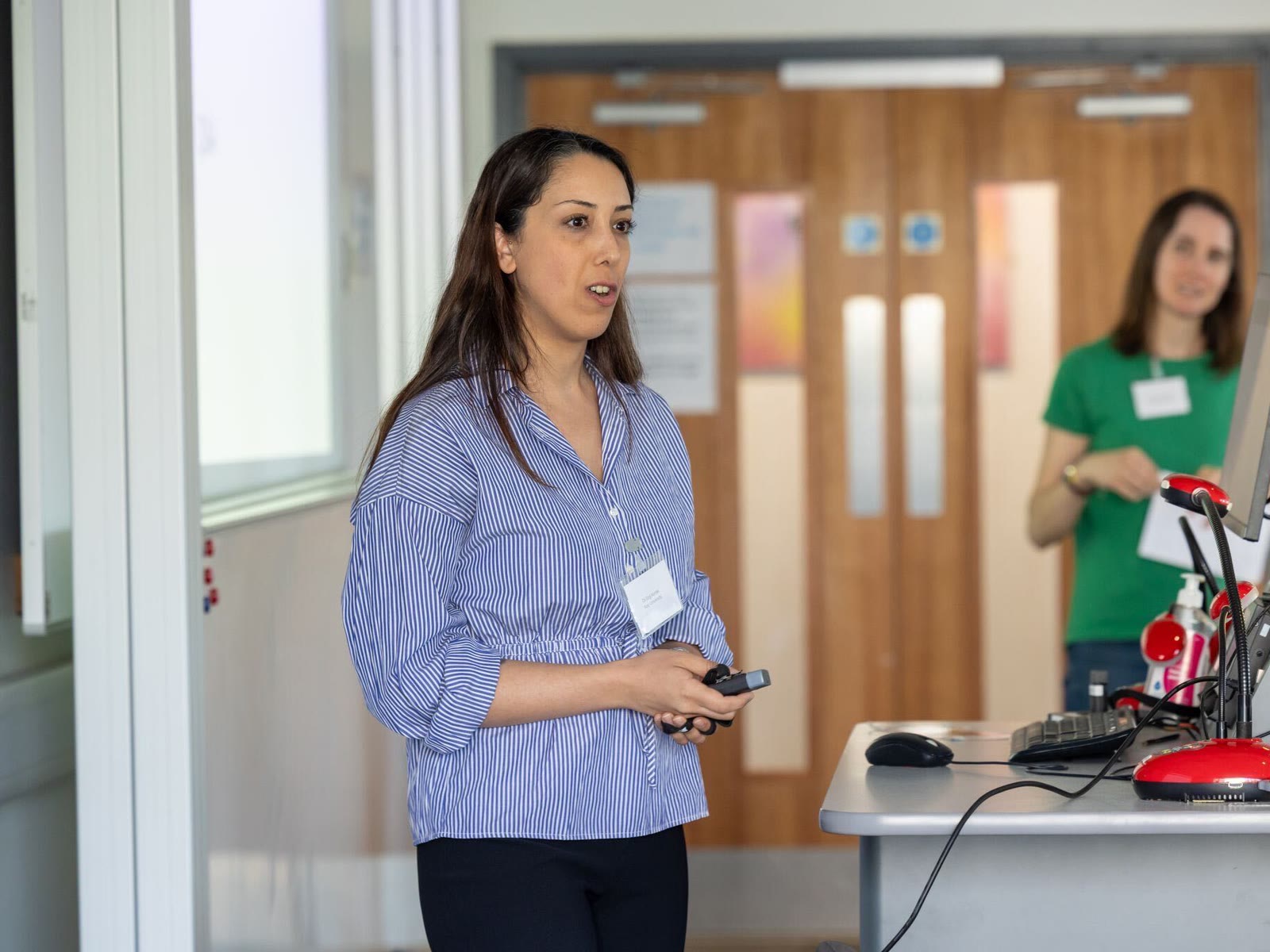
Dr. Kıvrak and Batuhan Balkı present BMDL work at the second CorSENSE workshop.
Dr. Kıvrak and Balkı presented BMDL contributions to rapid or continuous cortisol sensing during the CorSENSE project symposium at the University of Bath.

Grants
FIRST-SIGN receives ERC Proof of Concept support.
FIRST-SIGN will develop a painless wearable patch for cardiac biomarker testing at the point of need, without requiring a blood sample.
People
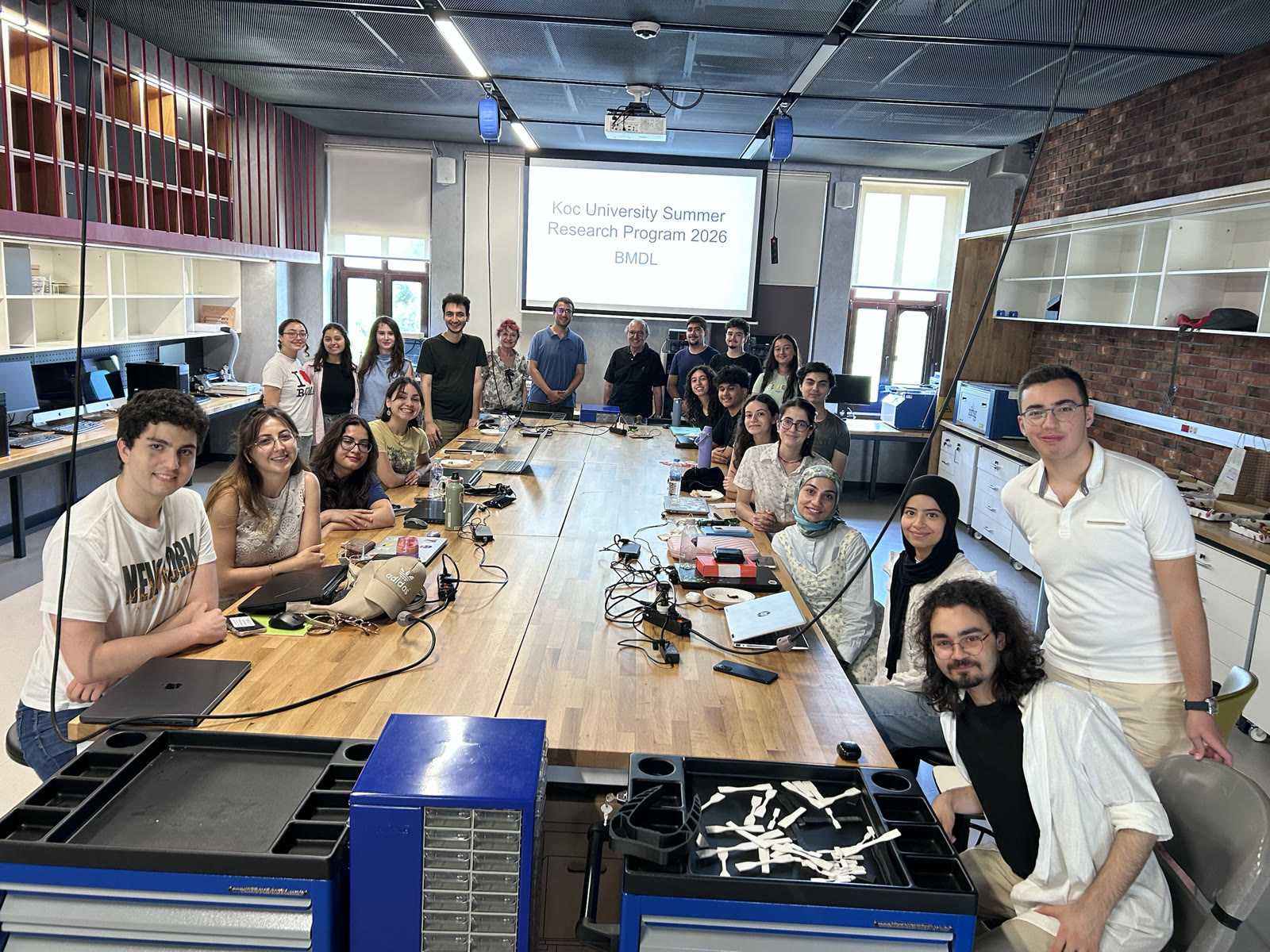
BMDL welcomes high school and university undergraduate students through the 2026 KU Summer Research Program.
The 2026 cohort of high school and university undergraduate students gathered with BMDL researchers as they began their summer research experience in the laboratory.

Grants
Point-of-care preeclampsia platform receives Grand Challenges support.
BMDL is collaborating with a Texas A&M University–led team on a Gates Foundation's Grand Challenges-supported project to develop an affordable point-of-care platform for early preeclampsia detection.
 Awards
Awards
Levent Beker receives the 2025 TÜBİTAK Incentive Award.
TÜBİTAK recognized Beker’s research on wearable and implantable medical sensors and devices, including MEMS, flexible sensors, and biodegradable implants.
 Conferences
Conferences
Emine Bardakçı presents electronics-free deep-tissue sensing at IEEE IUS 2025.
Bardakçı presented a passive ultrasonic backscatter approach for electronics-free sensing beneath tissue.
 Publications
Publications
A wearable non-enzymatic glucose sensor is published in Advanced Materials Technologies.
The study reports a black phosphorus–graphitic carbon nitride heterostructure sensor for real-time sweat glucose monitoring.
 Publications
Publications
Polymer surface properties reveal design rules for passive interstitial-fluid extraction.
The study connects surface chemistry, roughness, and wettability to capillary uptake through polymeric hollow microneedles.
 Publications
Publications
A hydrophilic hollow microneedle platform advances on-site biomarker detection.
The reported platform combines interstitial-fluid sampling with a compact route toward immediate biomarker readout.
 Publications
Publications
A wireless reader tracks frequency shifts from passive sensors.
The reader architecture supports interrogation of passive sensing systems without placing a conventional power source at the sensor.
Research opportunities
Join BMDL
Application information for prospective MSc and PhD students, postdoctoral researchers, and undergraduate interns.
View application routes →